Hair Masking and Fur Masking Techniques for Fashion & Pet Product Brands
Hair Masking and Fur Masking Techniques for Fashion & Pet Product Brands
Introduction
In professional image editing, some of the most challenging subjects to isolate are hair and fur. Unlike products with hard, defined edges, hair and fur contain thousands of fine strands that require exceptional precision to maintain a natural appearance.
For fashion brands, beauty companies, pet product retailers, and commercial photographers, poor masking can instantly reduce image quality and damage brand perception.
This is why professional hair masking and fur masking techniques remain essential in modern eCommerce image editing.
In this guide, we'll explain how hair and fur masking work, why they're important, and how they help brands create polished, high-converting visuals.
What Is Hair Masking?
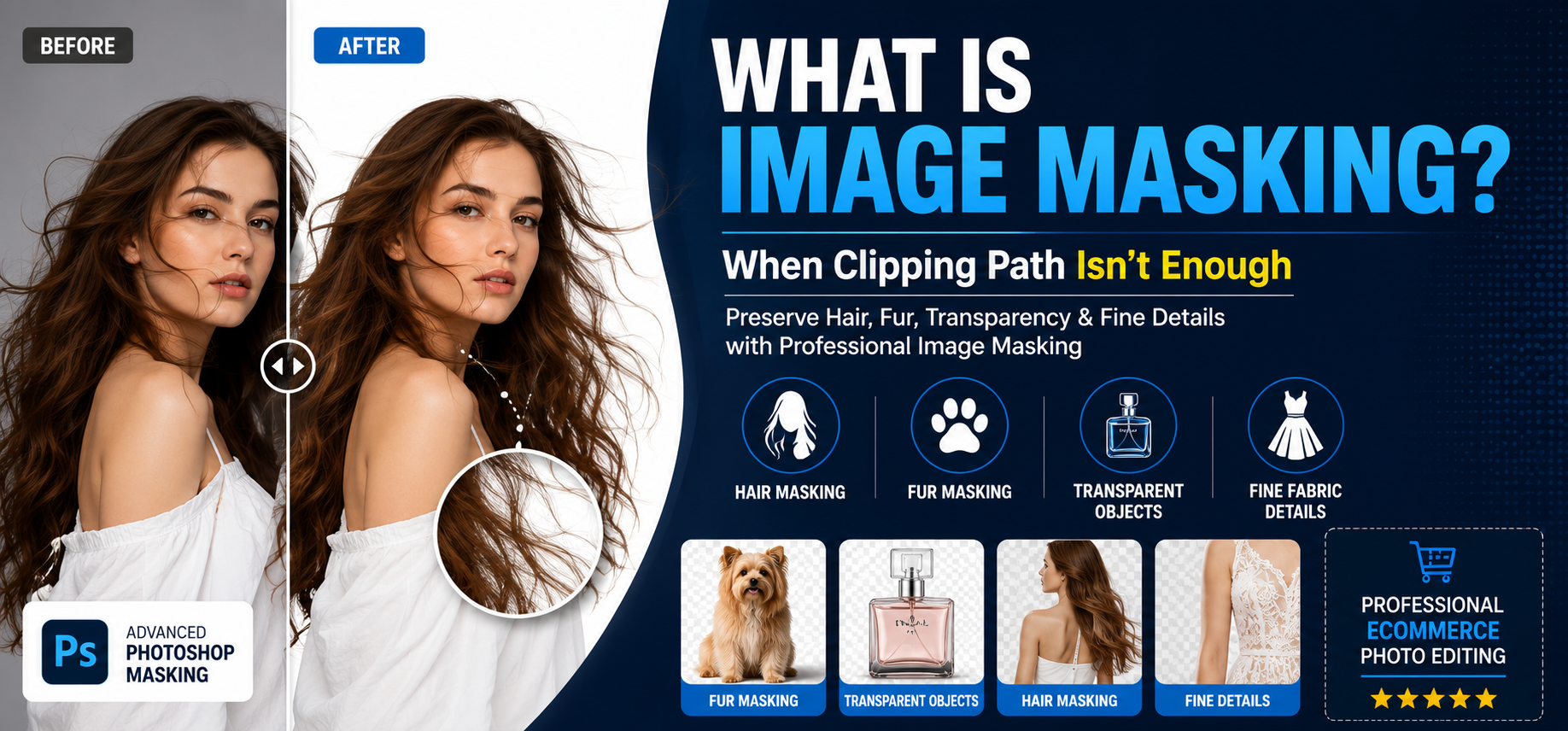
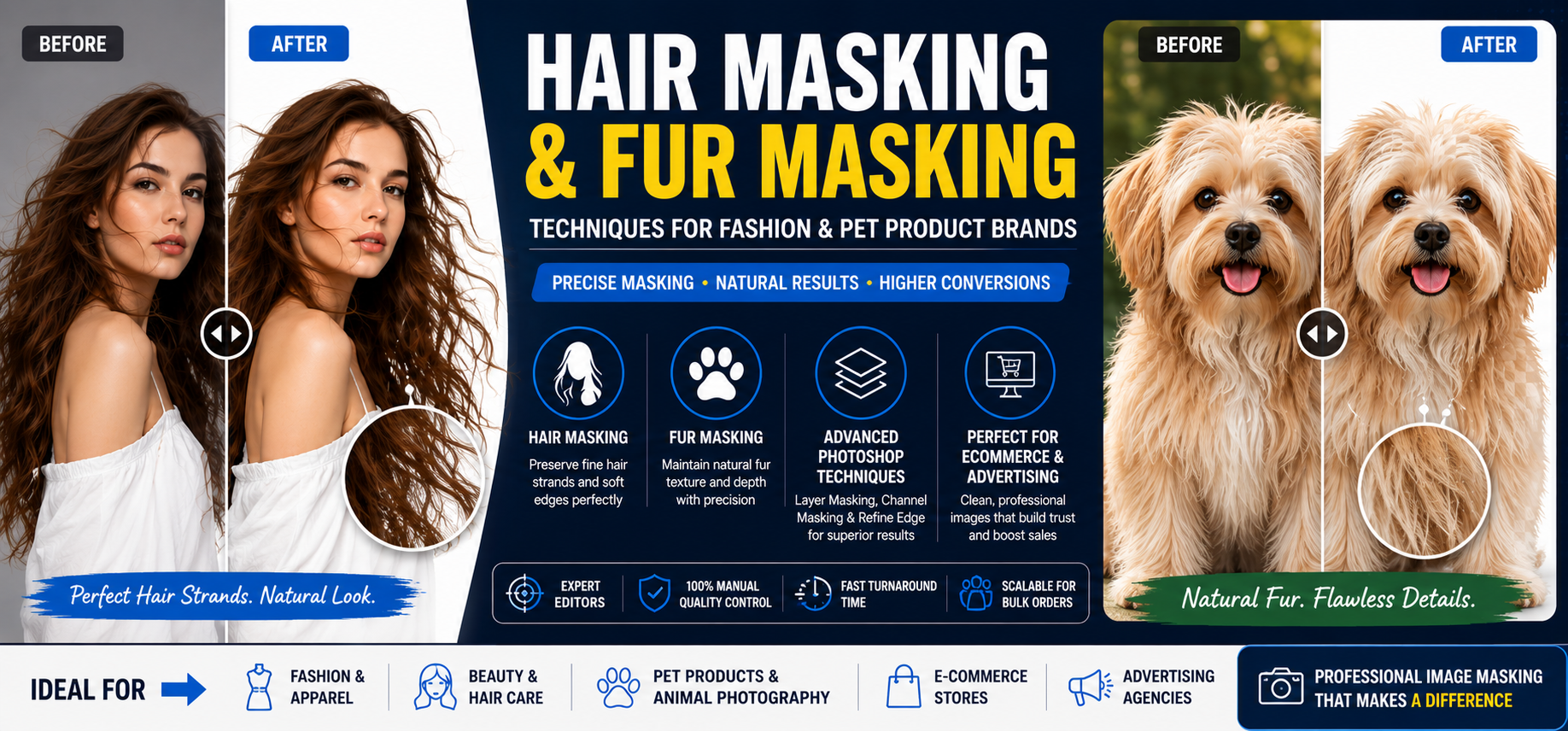
Hair masking is an advanced Photoshop technique used to isolate human hair from a background while preserving individual strands, texture, and natural movement.
Unlike clipping path, which creates hard edges, hair masking allows editors to maintain:
- Flyaway hairs
- Curly hair textures
- Fine strands
- Soft edges
- Natural transitions
This technique is widely used in fashion, beauty, and lifestyle photography.
What Is Fur Masking?
Fur masking is similar to hair masking but focuses on animals, pet products, and fur-based materials.
The process preserves:
- Individual fur strands
- Texture and depth
- Natural fur patterns
- Soft edge transitions
Professional fur masking is commonly used for:
- Pet brands
- Animal photography
- Luxury fashion products
- Faux fur apparel
Why Clipping Path Doesn't Work for Hair and Fur
Clipping path is ideal for products with hard edges.
However, when applied to hair or fur, it often causes:
- Jagged edges
- Missing strands
- Unnatural outlines
- Detail loss
For example, a model's hair may contain thousands of individual strands extending beyond the main shape. Tracing each strand manually with a clipping path is impractical and produces poor results.
Hair and fur masking preserve these intricate details naturally.
Why Hair Masking Matters for Fashion Brands
Professional Model Photography
Fashion retailers rely on clean, polished visuals to sell products online.
Hair masking allows:
- Background replacement
- Consistent branding
- Creative advertising campaigns
while preserving the model's natural appearance.
Better Marketing Visuals
High-quality masking improves:
- Social media advertisements
- Website banners
- Lookbooks
- Email campaigns
Professional images create stronger first impressions and improve engagement.
Luxury Brand Standards
Premium fashion brands often use advanced masking to maintain flawless image quality.
Customers associate visual quality with product quality, making accurate masking a valuable investment.
Why Fur Masking Matters for Pet Product Brands
Product Marketing
Pet brands frequently use images featuring dogs, cats, and other animals.
Poor masking can make fur appear:
- Artificial
- Jagged
- Blurry
Professional fur masking ensures realistic presentation.
Trust and Authenticity
Pet owners are highly visual consumers.
Natural-looking images help build:
- Trust
- Emotional connection
- Purchase confidence
Better Advertising Performance
Cleanly isolated pet images often perform better in:
- Social media ads
- Product listings
- Promotional banners
Common Hair Masking Techniques
Layer Masking
One of the most widely used techniques.
Benefits include:
- Non-destructive editing
- Easy refinements
- Excellent flexibility
Refine Edge Tool
Photoshop's Refine Edge feature helps:
- Detect fine strands
- Improve transitions
- Create smoother selections
Professional editors often combine Refine Edge with manual refinements.
Channel-Based Masking
Ideal for complex backgrounds and detailed hair structures.
Benefits:
- Greater accuracy
- Improved strand retention
- Enhanced realism
Common Fur Masking Techniques
Alpha Channel Masking
Used for highly detailed fur textures.
Suitable for:
- Animal photography
- Pet product advertisements
- Fur apparel
Color Channel Separation
Helps isolate fur from complex backgrounds.
This technique improves detail preservation and edge quality.
Manual Refinement
Even when AI tools are used, professional editors often manually refine fur edges to ensure premium-quality results.
AI Hair Masking vs Manual Hair Masking
AI-powered tools have improved dramatically in recent years.
AI Advantages
- Fast processing
- Bulk editing capability
- Lower cost
AI Limitations
- Missed strands
- Inconsistent edges
- Problems with complex backgrounds
Manual Advantages
- Superior precision
- Better quality control
- More natural results
For premium fashion photography, manual refinement remains essential.
Industries That Depend on Hair and Fur Masking
Fashion & Apparel
- Clothing brands
- Luxury fashion labels
- Online boutiques
Beauty Industry
- Haircare brands
- Cosmetic campaigns
- Skincare advertisements
Pet Industry
- Pet food companies
- Pet accessory retailers
- Animal product manufacturers
Advertising Agencies
- Commercial campaigns
- Marketing materials
- Brand promotions
Benefits of Professional Hair and Fur Masking
Improved Image Quality
Preserves natural detail and realism.
Stronger Brand Perception
Professional visuals enhance credibility.
Higher Conversion Rates
Better images help customers make purchasing decisions.
Greater Creative Flexibility
Allows easy background replacement for campaigns and promotions.
When Should You Use Hair or Fur Masking?
Choose masking when images contain:
✓ Hair strands
✓ Animal fur
✓ Soft edges
✓ Fine textures
✓ Transparent details
For products with solid edges, clipping path remains the more efficient option.
Why Brands Outsource Hair and Fur Masking
Many businesses outsource because these services require:
- Specialized expertise
- Advanced Photoshop skills
- Significant time investment
Professional editing companies provide:
- Consistent quality
- Faster turnaround
- Scalable production
This is especially valuable for large eCommerce catalogs and marketing campaigns.
Conclusion
Hair masking and fur masking are among the most advanced techniques in professional image editing. They allow brands to preserve intricate details that would otherwise be lost with traditional clipping paths or automated background removal tools.
For fashion brands, beauty companies, pet product retailers, and agencies targeting customers in the USA and Europe, professional masking helps create cleaner visuals, stronger branding, and higher-converting marketing assets.
When image quality matters, precise masking remains one of the most effective tools available.